Published:
Chasing Full-Circle Moments and Making History
Black Hawk College East Campus has long been known for producing some of the strongest livestock judging teams in the country, but the 2025 season has pushed the program into truly historic territory. With major wins across the nation, a chance at reclaiming the Team of the Year title and a coaching staff guiding students to their highest potential, this year’s team has set a new standard for junior collegiate judging. The title is not secured yet, but the team enters their final contest in Houston with momentum, consistency and a season that already stands among the best in program history. To help readers understand both the sport itself and the significance of this season, I sat down with a current team member, Addyson Lehman, to talk through what livestock judging is, what the team has accomplished and what it means to step into leadership as they prepare to host the 40th Annual Dan Hoge Invitational.
Interview with Addyson Lehman
How would you describe this season for Black Hawk East?
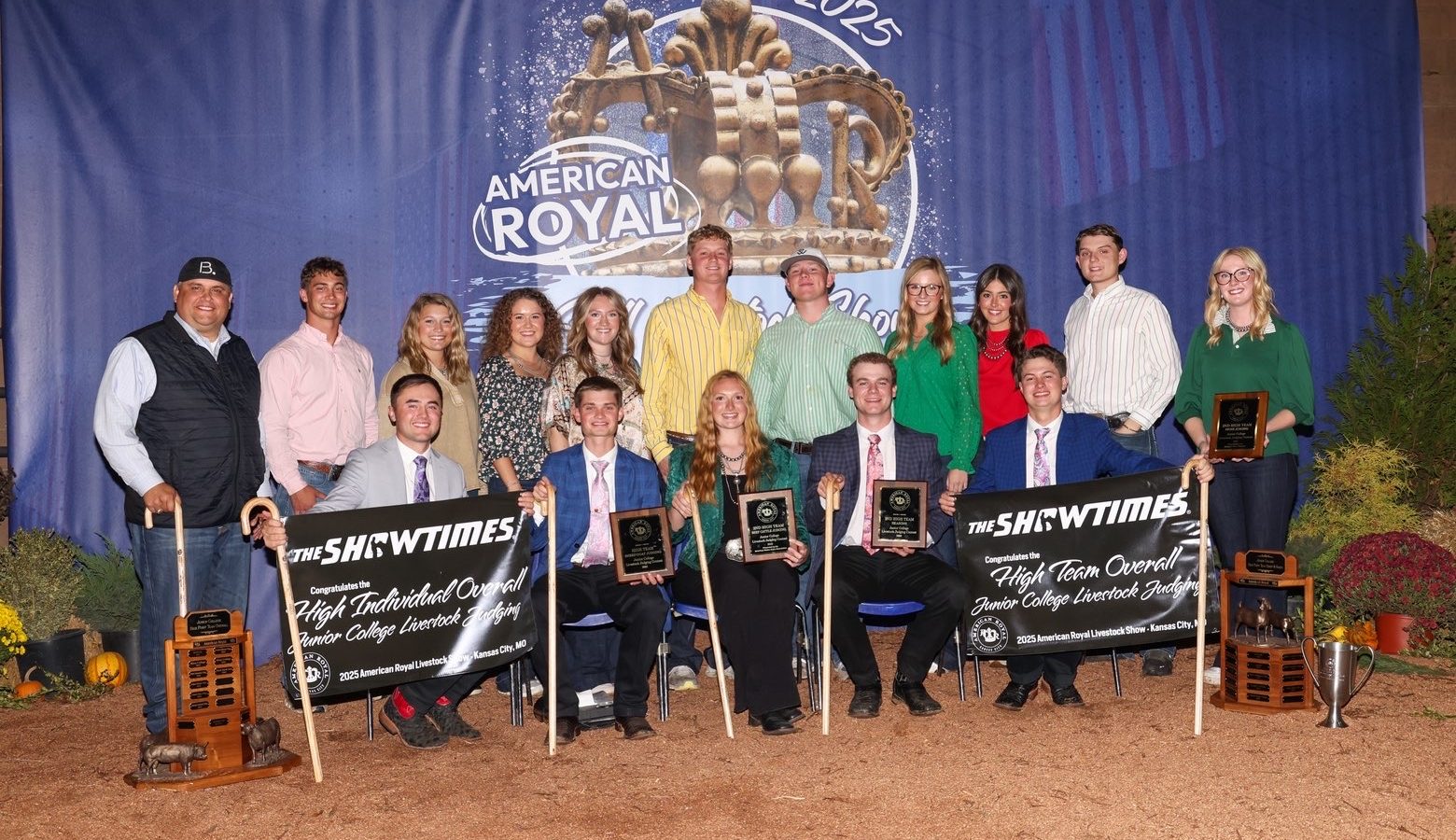
We are nearing the end of one of the most successful junior-collegiate seasons of all time. The team from BHE has already seen wins at the American Royal in Kansas City, NAILE in Louisville, NWSS in Denver, a second-place finish at the Cattlemen’s Congress in Oklahoma City and numerous high-placing individuals. Points are accumulated from these major contests, and an upcoming fifth in Houston, for a Team of the Year award. Now, coaches Dr. Blake Bloomberg and Grace Angotti are preparing our team for the final contest to earn that coveted title.
Context
This season stands out not only for its wins, but for its place in program history. The 2025 team could be the first since the 2021–22 team to earn Team of the Year. While past teams have often finished as the reserve team of the year, this is Coach Grace Angotti’s first team and they could claim the title outright, making the achievement even more meaningful.
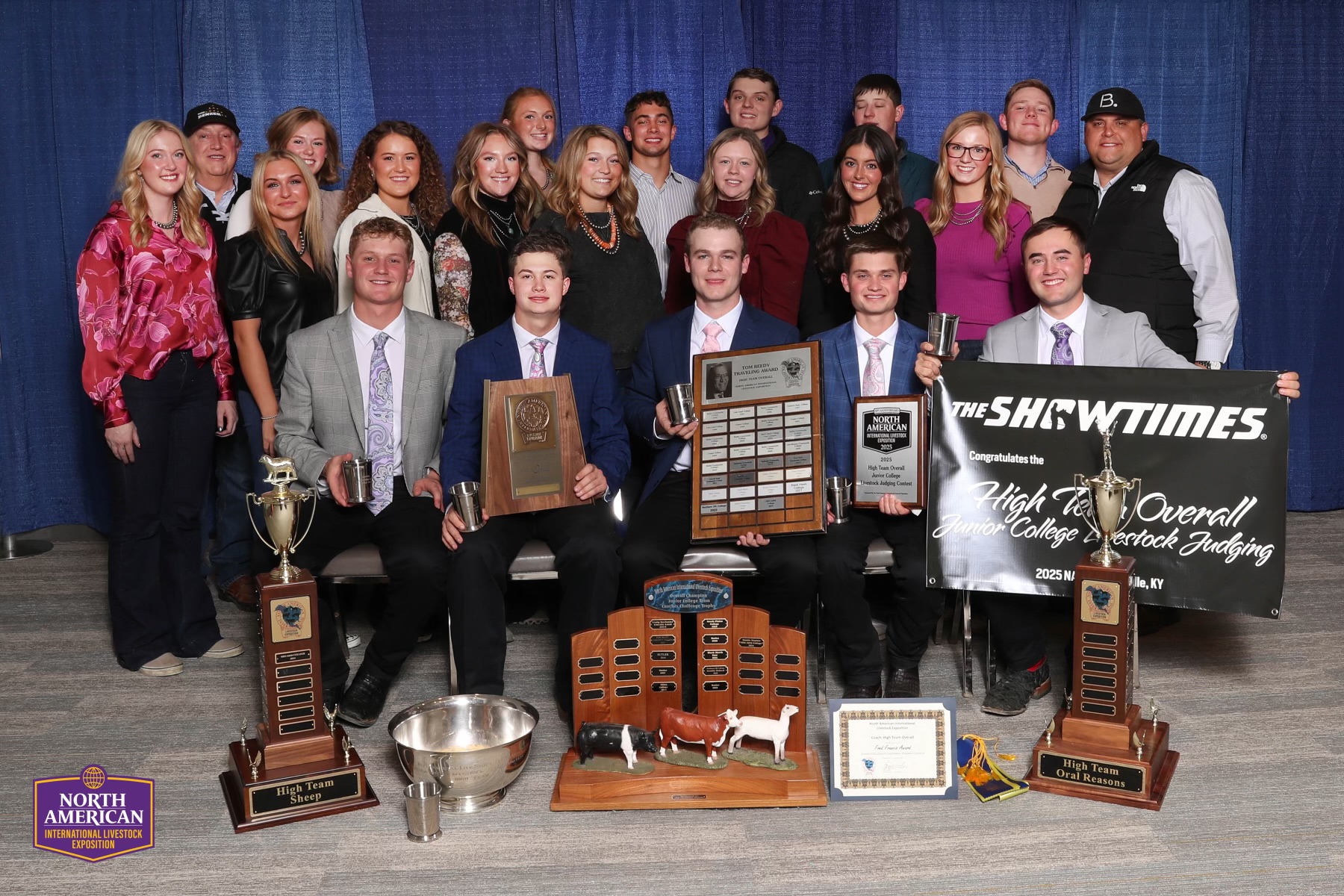
Back Row Standing (Left to Right): Maddy Baynes, Addyson Lehman, Mason Kinney, Nick Jackson, Wyatt Baxter, Cole Storm Front Row Standing (Left to Right): Karsyn Cocanower, Olivia Shike, Amy Geary, Kelsey Zepp, Carolyn Johnson, Ella Bobell, Chloee Barnes Front Row Sitting (Left to Right): Will Hoopes, Jace Judson, Logan Corzatt, Chase Harker, Drew Jacobson Pictured with Grace Angotti, Lee Denzer, and Dr. Blake Bloomberg
Explain to someone who has never judged before what happens at a contest.
At these contests, students evaluate twelve classes of animals from the four major meat species: cattle, swine, sheep and goats. We give eight sets of oral reasons defending these placings. These classes of four animals are evaluated based on structural correctness and soundness, muscle and growth, and overall balance and look. Then, placed from best to worst. The scores are calculated based on how close they are to an official committee’s placing, while the reasons scores are given by an individual committee member listening.
Context
Contest days move quickly. The students typically have around 20 minutes between each set of reasons, which requires sharp memory, strong decision-making and the ability to speak clearly under pressure. It is a blend of livestock evaluation, communication and critical thinking that challenges students in every way.
What do students gain from livestock judging?
By participating in livestock judging, students can grow their livestock knowledge and network with established people and aspiring peers, preparing them for our careers and involvement in the livestock industry post graduation. But beyond the impact that judging has on livestock minds, it is also about learning to observe carefully, think critically, speak confidently and lead effectively. The decision-making abilities and leadership skills that students develop will continue to benefit them far beyond the show ring.
Context
The growth students experience through livestock judging reaches far beyond evaluating animals. The constant practice in decision making, public speaking and defending their thoughts helps students mature into confident communicators who can lead in any setting. These skills translate directly into the expectations of today’s agricultural workforce, where employers value individuals who can analyze information quickly, justify their decisions and communicate with purpose. Over time, the confidence built through giving reasons, the discipline required to evaluate classes and the ability to think clearly under pressure all contribute to personal and professional development. Students leave the program not only as stronger evaluators, but as capable leaders who are prepared for the challenges and opportunities that lie ahead in both the livestock industry and their everyday lives.
Before Houston, the team is hosting the Dan Hoge Invitational. What did that look like for you?
Before the team leaves for the final trip, they get to put these skills to use in a separate way. On March 7 at the East Campus, the team hosted the 40th Annual Dan Hoge Invitational Livestock Judging Contest. Youth participants from across the country traveled to evaluate classes and either give oral reasons or answer a set of questions about the classes. The animals for these classes were picked out and placed by the BHC team, who also wrote the questions and listen to the contestants’ reasons. At the end of the day, the team members gave their critique of the classes and official placings.
For many of us, it’s is a full-circle moment as we competed there during our 4-H or FFA careers. Now, we learned the ins and outs of running a contest and serving as an official committee, rather than competing for ourselves. This served as an opportunity to showcase the confidence and leadership skills gained in the two years at Black Hawk, which both prepare us for the next step of our judging journey and support the youth who will follow in our footsteps.
Context
Hosting the Dan Hoge Invitational is especially meaningful because so many team members grew up in youth agriculture programs like 4-H, which students can join as early as 8 years old, and FFA, which can begin in junior high and continue through high school. Many of them spent their childhoods showing livestock, judging classes, and traveling to contests just like this one. Some even competed at the Dan Hoge Invitational when they were younger, making their return as officials a true full-circle moment. Stepping into the role of educators and committee members is a point of pride, reflecting years of dedication, early mornings, and countless hours spent learning how to evaluate livestock. It allows them to give back to the next generation while displaying the confidence, leadership and professionalism they have developed during their time at Black Hawk.
Final Thoughts
As the 2025 Black Hawk College livestock judging team prepares for their final contest in Houston, they do so with the knowledge that the Team of the Year title is still on the line. Nothing is guaranteed, and the season’s outcome will be decided by one last day of classes, reasons and composure. But regardless of what happens in Houston, this team has already made history through their wins, their growth and the standard they have set for themselves and the program. Their journey reflects early mornings, long practices, miles on the road and the trust built between teammates and coaches. Hosting the Dan Hoge Invitational and stepping into leadership roles shows how far they have come in two years at Black Hawk. Whether they leave Houston with the title or not, the impact of this season will continue to shape the program and inspire the youth who will follow them.
About the Author